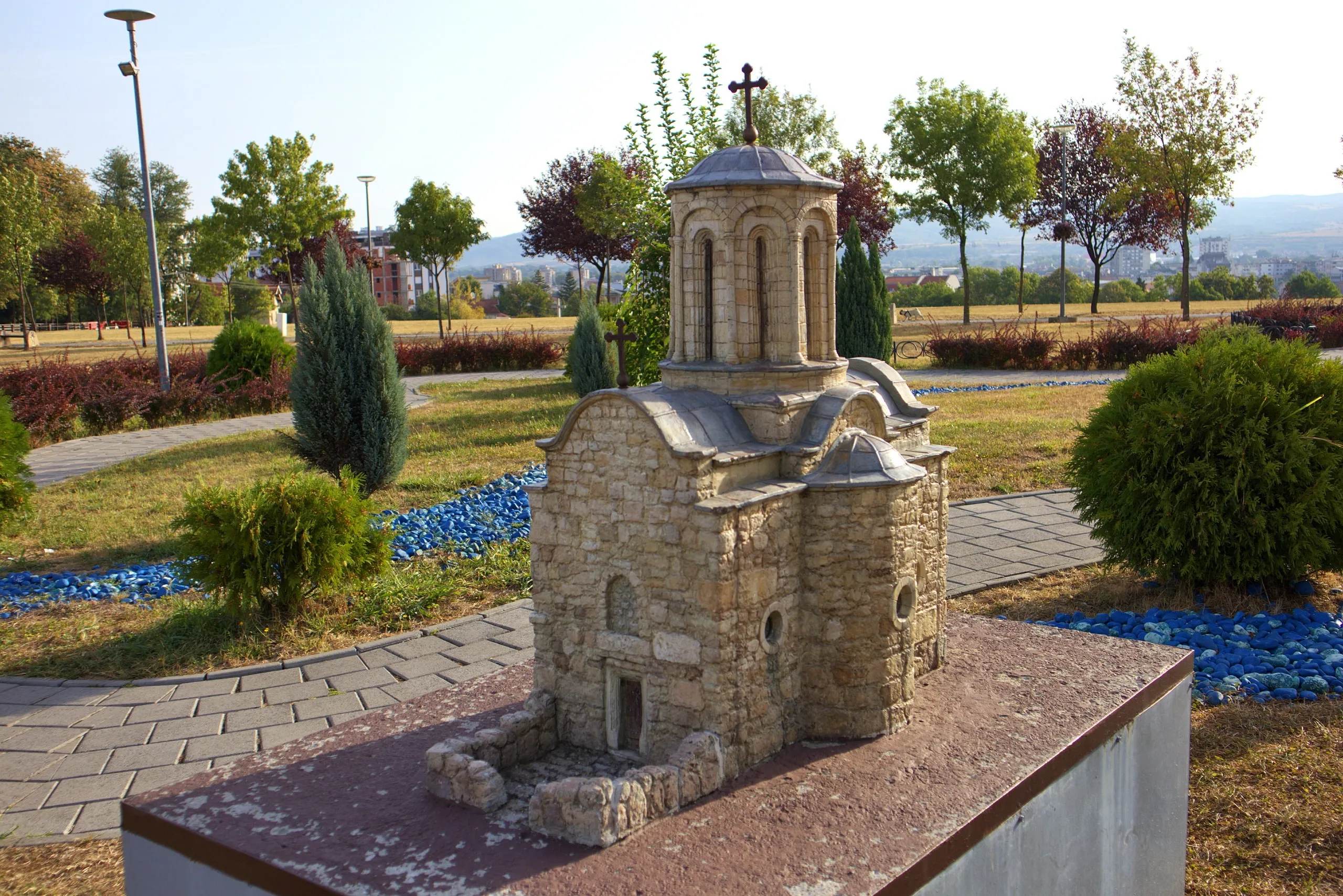
Pavlovac
Monastery with the Church of Saint Nicholas on Mount Kosmaj, from the time of Despot Stefan Lazarević · Koraćica, Mladenovac
Pavlovac, on the southern slopes of Mount Kosmaj, in the village of Koraćica near Mladenovac, dates from the first quarter of the 15th century, the time of Despot Stefan Lazarević. Beside the small stone Church of Saint Nicholas, a rare medieval monastery residence has also survived.
How it looked when it was built
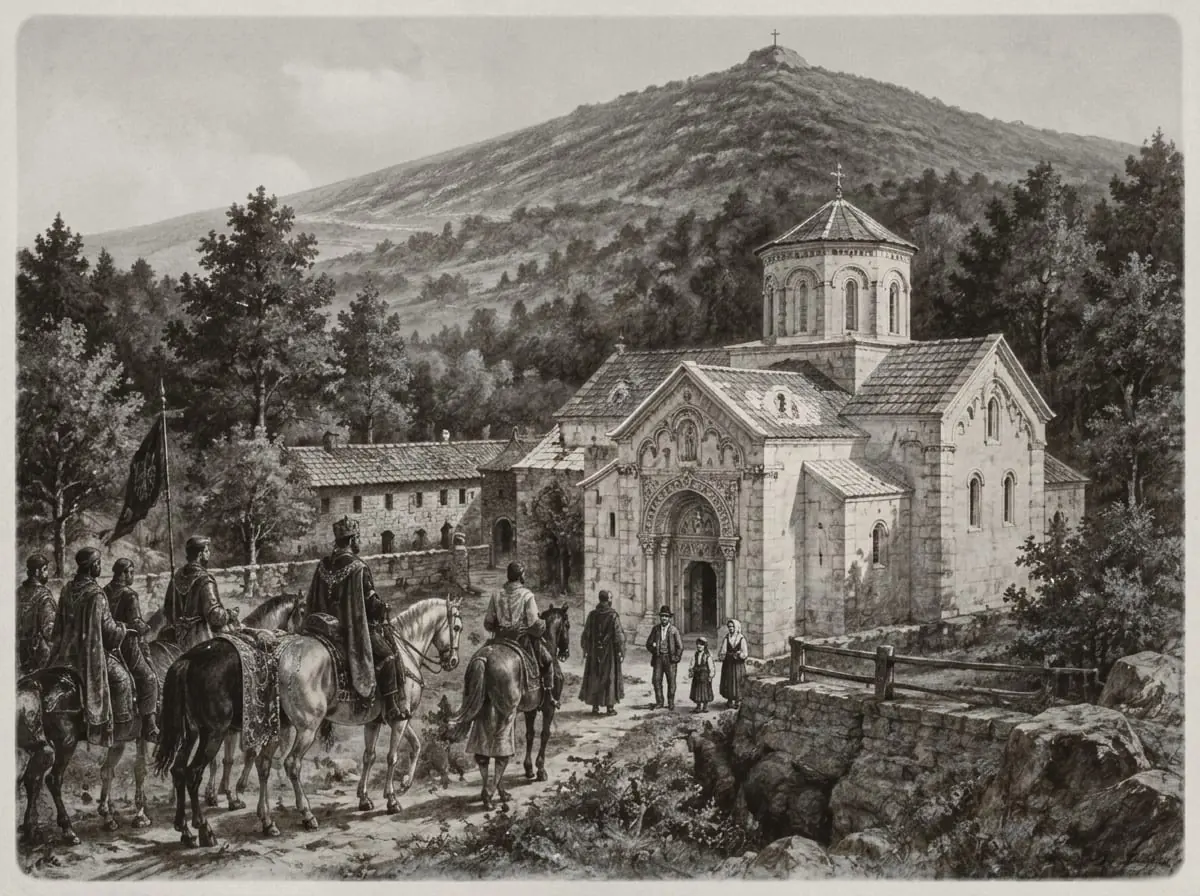
Miniature and original
Gallery
Drag the slider and compare the miniature with the real Pavlovac on Mount Kosmaj. Pay attention to the round windows and the drum of the dome.
History
On a level stretch of ground above the Tihanovački stream, on the slopes of Mount Kosmaj, the ruin of a stone church stood for centuries, and all anyone knew about it was that it was “old”. Research revealed that a whole monastery settlement lies around it, from the beginning of the 15th century, the age of Despot Stefan Lazarević. Pavlovac is one of the oldest monuments of Serbian medieval culture in the area of present-day Belgrade.
Read moreShow less
At the beginning of the 15th century Kosmaj lay in the heart of the Serbian Despotate, the state of Despot Stefan Lazarević, son of Prince Lazar. An important road from Belgrade to the southern parts of Serbia led over this mountain, and the monastery was built right beside it, on the sunny side of a steep slope, on a plateau above the stream.
Among the few sources about this area is a letter from Despot Stefan to the people of Dubrovnik, written “u Pavlovceh” (“in Pavlovci”). Historians date it to 1424 or 1425. It is the only known medieval mention of the place after which the monastery was named. The village of Pavlovci today belongs to Koraćica.
Who built the monastery is not known. A living folk tradition credits the despot himself with building it, and scholars also suppose that he could be the founder, but there is no reliable proof of that. Tradition gives 1417 as the year of foundation, and on that basis six centuries of the monastery were marked in 2017. On the evidence of the architecture, the remains of the wall paintings and the archaeological finds, the church is dated to the first quarter of the 15th century.
After the fall of the Despotate the monastery did not die out at once. The Turkish census of the Avala nahiya from 1560 mentions a “monastery of Saint Nicholas” in the village of Pavlovci. Later it fell into neglect, so writers of the 19th century mention it as a deserted monastery.
Research and conservation work on the church began in 1967. Systematic archaeological and architectural research of the whole complex lasted from 1973 to 1975, and from 1977 the secular buildings were restored as well. Beside the church three more buildings were discovered, raised at the same time. One of them is a residential building, a rare example of the domestic architecture of medieval Serbia.
Today Pavlovac is a monastery of the Eparchy of Šumadija and an immovable cultural property of great importance.
People and events
Ruler; founder according to tradition · 1377–1427
Despot Stefan Lazarević
Son of Prince Lazar, prince (1389–1402) and despot (1402–1427). Pavlovac was built under his rule. Tradition credits him with building the monastery. His letter to the Republic of Dubrovnik of 21 November 1424 was written “u Pavlovceh”: it discharged the accounts of Dubrovnik merchants who served as his customs officers. In nearby Markovac there is a memorial stone dedicated to him.Event · 1424
Letter “u Pavlovceh”
On 21 November 1424 Despot Stefan, at Pavlovci, issues the Republic of Dubrovnik a discharge of accounts for several Dubrovnik merchants, his customs officers. It is the first known medieval mention of the place.Event · 1560
Turkish census
The census of the Avala nahiya records the monastery of Saint Nicholas in the village of Pavlovci.Event · 1967–1977
Research and restoration
Restoration of the church, systematic excavations (1973–1975) and restoration of the monastery's secular buildings.
Architecture
Morava school
The Pavlovac church belongs to the Morava school, but it is unusual in many ways. Its ground plan is a compressed triconch: the choir apses are five-sided, the altar apse is three-sided, and on the west there is a narthex, built at the same time as the church. Above the centre rises an eight-sided drum with a dome, set on a complex, cylindrical base; at the corners of the drum there are three different types of colonettes.
The church is built of rubble and roughly dressed stone, without brick, so it does not have the characteristic Morava bands of stone and brick either. Instead, on the side facades and the choirs there are round windows with stone rosettes, made in the spirit of Morava carving. The interior was once covered with wall paintings, and the stone altar table in the sanctuary has now been restored.
Where is the original
Koraćica, Mladenovac
Related monuments
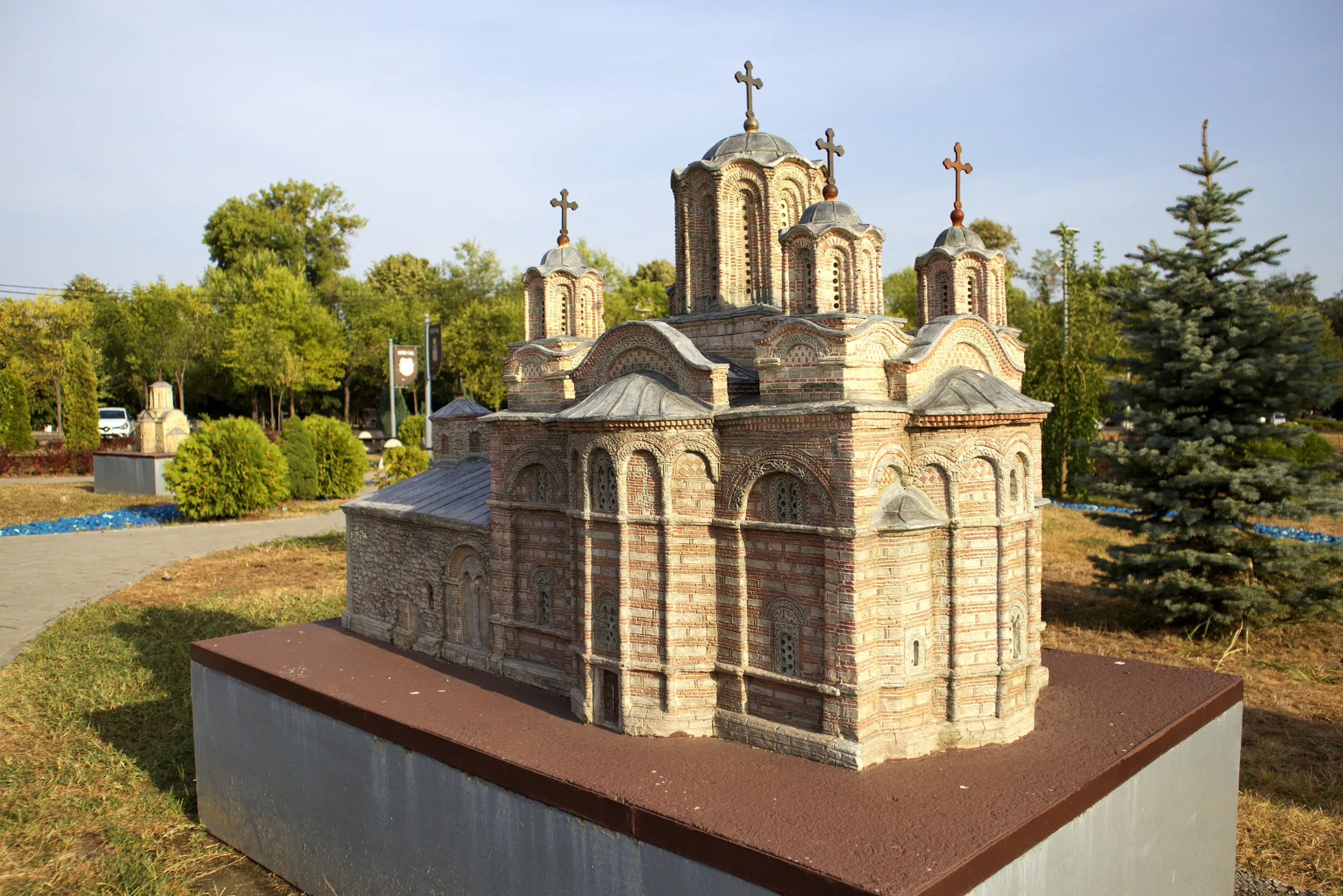
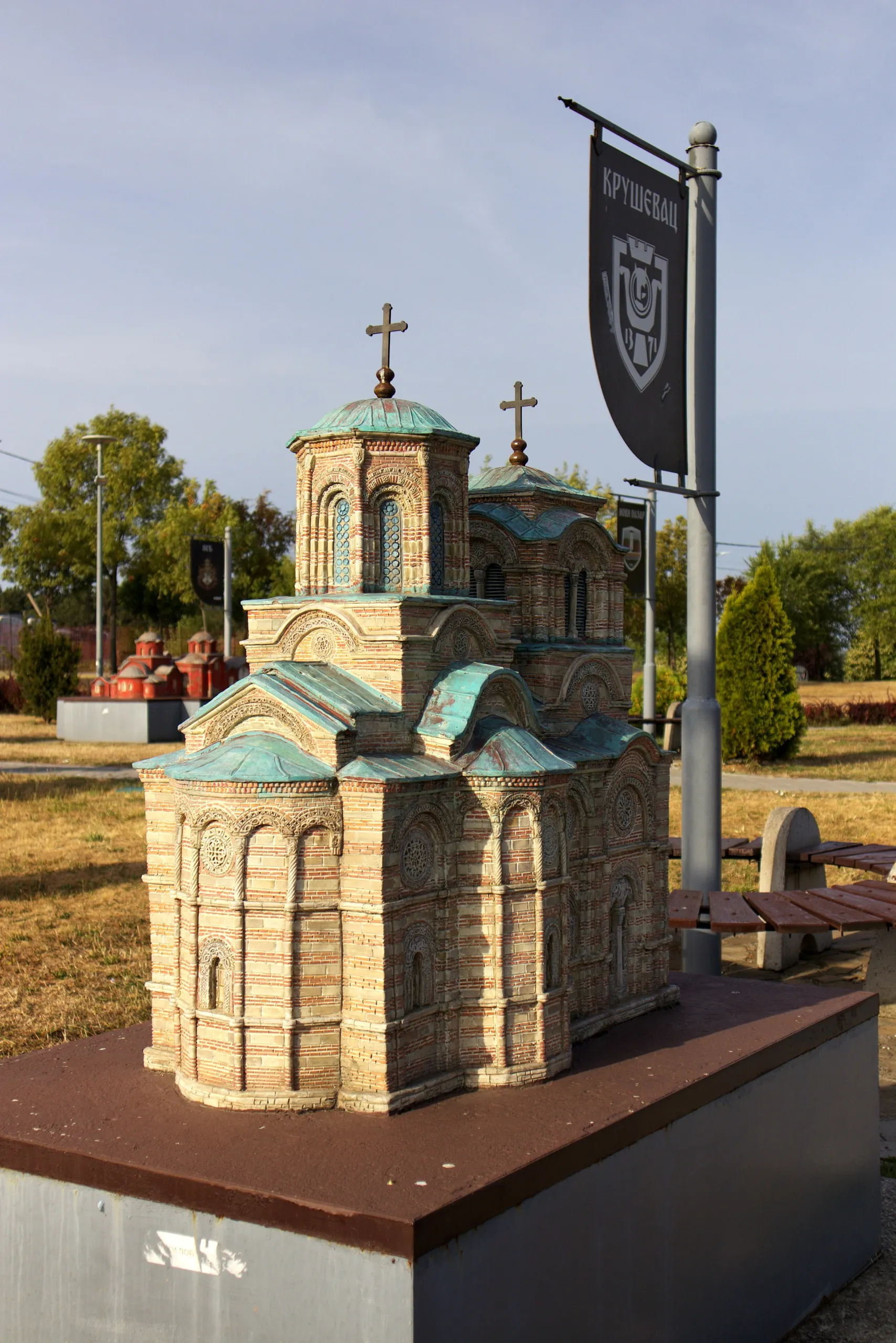
Sources(4)
- Republički zavod za zaštitu spomenika kulture – Beograd, Manastir Pavlovac – Koraćica (SK 96), Informacioni sistem nepokretnih kulturnih dobara, Republički zavod za zaštitu spomenika kulture (pristupljeno 4. 10. 2026), 2026
- Svetlana Mojsilović, Srednjovekovni manastir u Pavlovcima na Kosmaju – prostorno-arhitektonska studija, Saopštenja XIII, 127–146, Republički zavod za zaštitu spomenika kulture, Beograd, 1981
- Vikipedija (sr), Manastir Pavlovac, Vikipedija na srpskom jeziku (pristupljeno 4. 10. 2026), 2026
- Vikipedija (sr), Stefan Lazarević, Vikipedija na srpskom jeziku (pristupljeno 3. 10. 2026), 2026